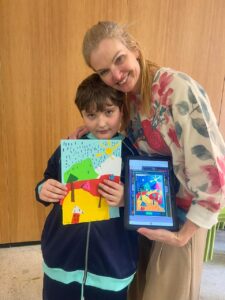
A few weeks ago, we launched a series of AI Art workshops at CSAI, and very quickly we realised that what we’re doing with children goes far beyond simply generating images.
Right now, artificial intelligence is often discussed in extremes. It’s either presented as something magical, or as something that will replace people entirely. Neither of these narratives is helpful for children.
So in our workshops, we take a different approach.
We slow things down. We keep the conversation human. And we focus on understanding rather than hype.
The most important idea we share with children is simple:
AI is a tool. And they get to decide if, when, and how they use it.
Taking the “Magic” Out of AI
We avoid describing AI as “super intelligent” or saying that it “thinks like a human.” Those explanations often create more confusion than clarity.
Instead, we explain it in simple terms:
AI learns from examples. It finds patterns.
That’s it.
We even run small activities where children choose which images would “teach” an AI system about an artist such as Van Gogh. Very quickly they discover something important: if the examples are wrong, the AI learns the wrong thing.
Suddenly AI stops feeling mysterious.
It becomes logical, understandable, and clearly shaped by human decisions.
That shift replaces fear with curiosity.
Art First. AI Second. Always.
In our sessions, children start by making art with their hands.
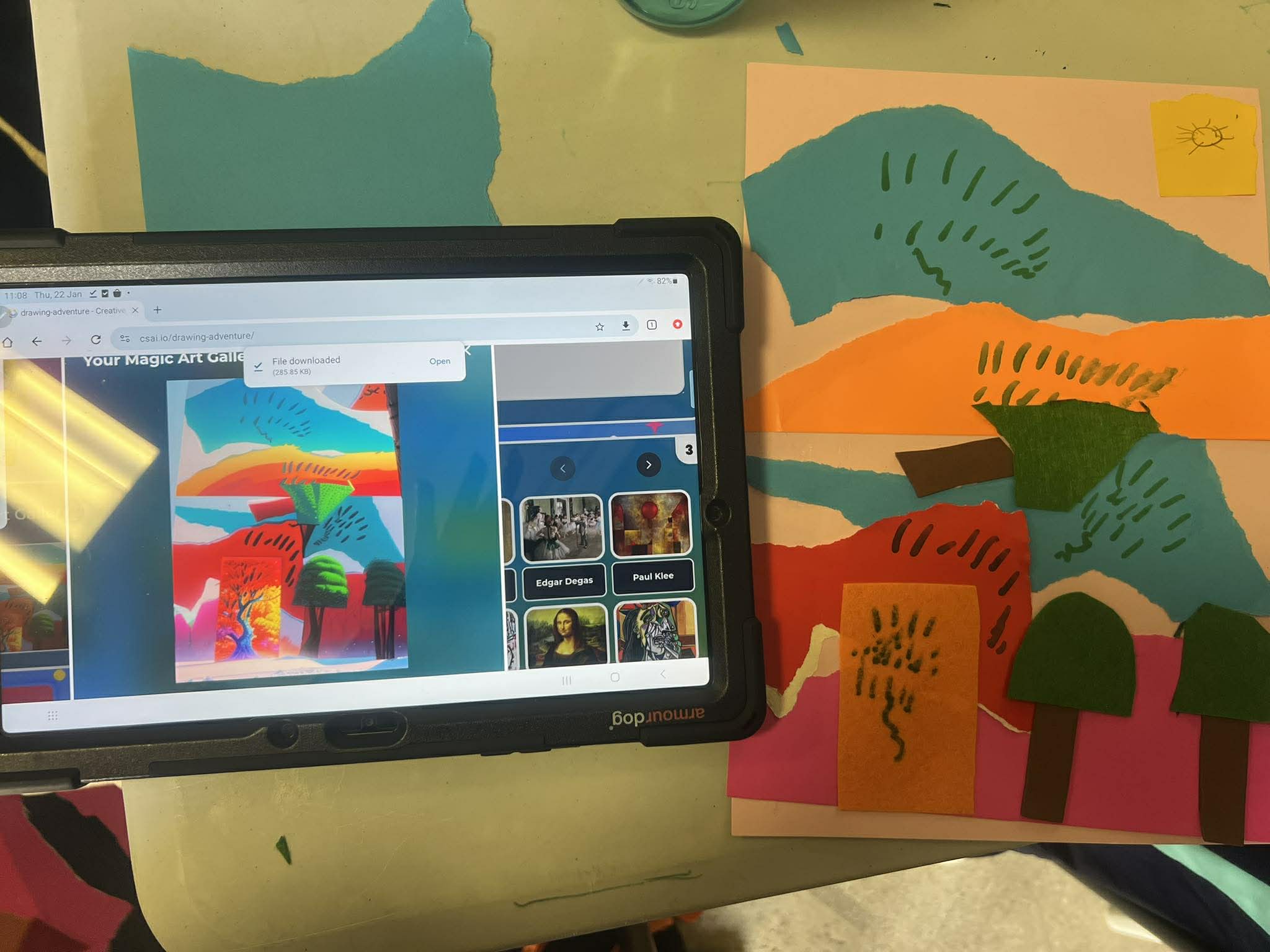
They tear paper, build layered landscapes, experiment with colour, texture, and space. They make real artistic decisions.
Only after this process do we introduce AI tools that can transform the style of their work.
This order matters.
It shows something I believe deeply as an artist:
The human creates the meaning. AI can change the surface.
When the children see their work transformed, they are excited — but then we ask them questions:
-
What changed?
-
What stayed the same?
-
Who is the artist?
And they understand immediately. The composition, the choices, the idea behind the image — those belong to them.
Ethics Without Making It Heavy
We don’t give long lectures about AI ethics, but we do plant seeds.
Children naturally ask where AI images come from, and that opens the door to conversations about artists, creativity, and respect.
We talk about how AI learns from existing artwork and how that raises questions about credit and fairness.
Children understand these ideas instinctively.
They know that artists matter.
Small conversations like this are important. They help children see technology as something connected to people — not something separate from them.
Building Confidence Instead of Fear
One of the most rewarding moments in these workshops is when a child realises:
“Oh, this isn’t scary. I understand this.”
That is the real goal.
Not to turn every child into a programmer.
Not to push technology on them.
But to give them clarity and confidence so they can approach new tools creatively rather than fearfully.
They may choose to use AI in the future, or they may not.
But if they do, they will understand what it is — and what it isn’t.
The Future of AI Education
At CSAI, we believe that meaningful AI education is not only technical.
It is creative, ethical, and grounded in human expression.
No matter how powerful technology becomes, the most important things will always remain human:
imagination, artistic choices, and the freedom to create.
We will be announcing new workshop dates and availability soon, so schools and parents interested in future sessions will be able to join upcoming programmes.