AI is now part of everyday life.
People use ChatGPT to write emails, social media posts, captions, CVs, ideas, business plans and even personal messages. Millions of people generate AI images of themselves as 1980s characters, dolls, action figures, fantasy heroes or film stars.
These images go viral. People share them. People laugh. People join the trend.
Almost nobody seems particularly concerned.
But when an artist starts using AI as part of a serious creative practice, the reaction can suddenly become very different.
“You are stealing.”
“This is not art.”
“You just typed a sentence.”
“You are wasting water.”
“You have no talent.”
This contradiction around AI art criticism is something I have become increasingly interested in.
Why is AI acceptable when it is being used casually by millions of people, yet suddenly becomes morally questionable when an artist openly experiments with the same technology?
AI Is Already Part of Everyday Creativity
We are already surrounded by AI-assisted content.
People use AI to improve photographs, generate text, edit videos, design social media posts, translate documents and create images.
Many people probably use artificial intelligence without even thinking about it.
Yet artists using AI are often treated as though they have crossed some extraordinary ethical boundary.
That seems strange to me.
If you ask ChatGPT to rewrite your email, AI has contributed to your writing.
If you generate an image of yourself wearing 1980s clothes and post it online, you have created AI-generated imagery.
If you use automated editing tools, filters or image enhancement software, algorithms are already participating in your creative process.
So why does the conversation change so dramatically when the person using the technology calls themselves an artist?
Using AI Does Not Mean Pressing One Button
One of the most common assumptions about AI-generated art is that the artist simply writes one sentence and accepts whatever appears.
That has certainly not been my experience.
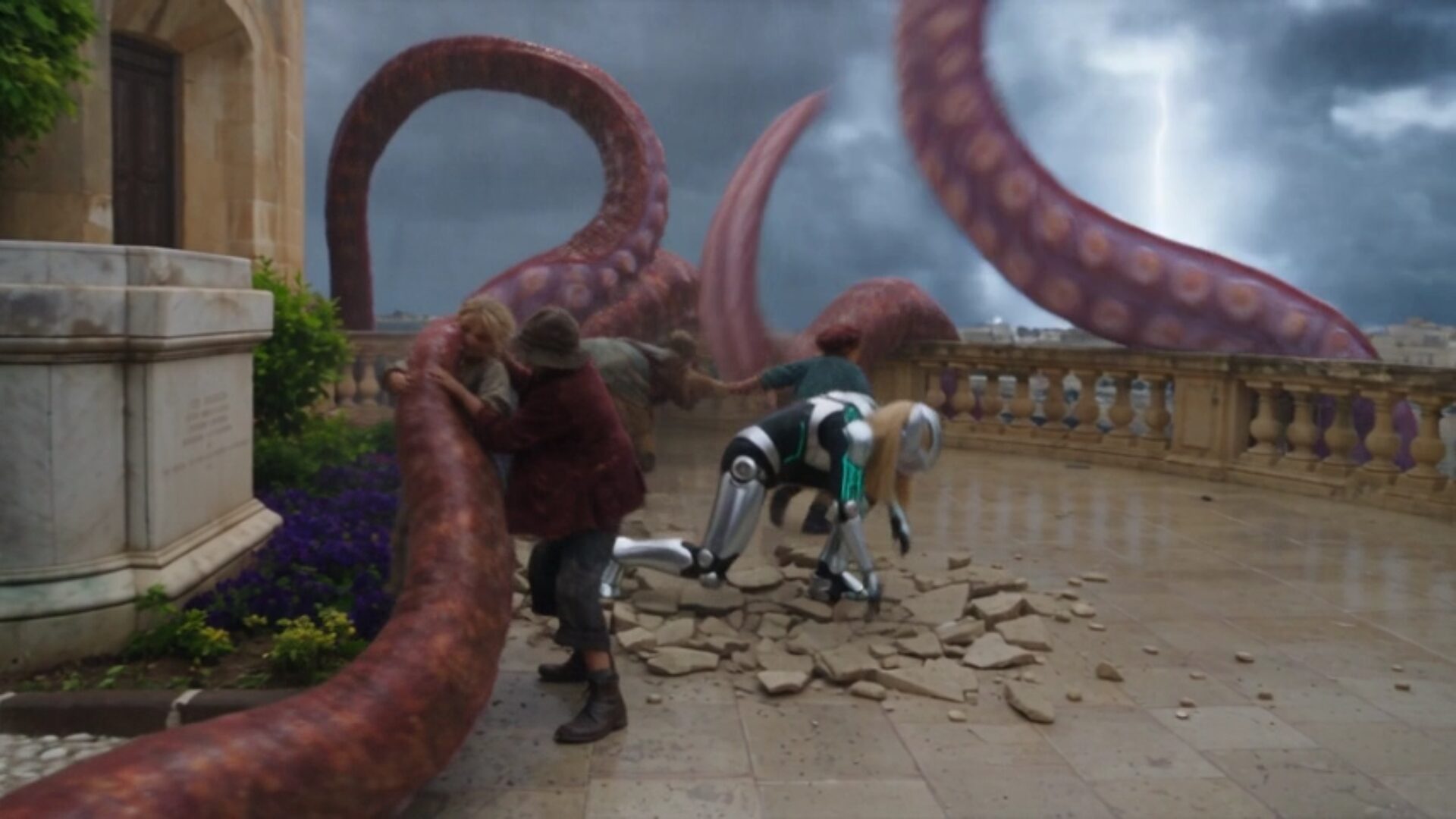
When I create my AI films, I develop characters, stories, locations, visual references and costumes.
I work on camera angles, movement, continuity and atmosphere.
I generate footage, reject it, change prompts, regenerate it, edit it and combine different sequences.
Sometimes I spend an absurd amount of time trying to make three seconds of video work properly.
AI is obviously part of that process.
I have never tried to hide that.
But so am I.
This is where I think the conversation around AI and creativity becomes much more interesting.
A tool does not automatically determine the artistic value of the work created with it.
Artists Have Always Used New Technology
Art has always changed alongside technology.
Photography was once viewed with suspicion because a machine was involved.
Digital art was dismissed because there was no physical paint.
Photoshop was accused of making photography too easy.
Digital photography was supposed to destroy film.
Now these tools are completely normal parts of contemporary creative culture.
AI is simply the newest uncomfortable technology.
There are serious questions surrounding artificial intelligence.
Copyright, training datasets, environmental impact, employment and the future of creative industries all deserve discussion.
But discussing those issues is very different from entering an artist’s comment section and calling them a thief.
Especially when the same person may have used ChatGPT earlier that day.
The Strange Double Standard Around AI Art
What interests me most is how acceptable AI becomes when the result is disposable entertainment.
An AI birthday image? Fine.
A viral ChatGPT portrait? Fine.
An AI meme? Fine.
A fantasy version of yourself? Fine.
A funny social media trend shared by thousands of people? Fine.
But when somebody starts developing a recognisable body of creative work using AI, suddenly people become extremely concerned about artistic legitimacy.
Perhaps what actually makes people uncomfortable is not AI itself.
Perhaps it is the possibility that AI might genuinely become another artistic medium.
Because once that happens, we have to ask more difficult questions.
Where does the artist end and the tool begin?
How much human decision-making constitutes authorship?
Does authorship come from physical labour, ideas, direction, selection, editing — or a combination of all of these?
These questions existed long before artificial intelligence.
Artists Have Never Worked Completely Alone
Film directors do not personally operate every camera.
They do not sew every costume, build every set, compose every piece of music or create every visual effect.
Contemporary artists frequently work with fabricators, programmers, engineers and technicians.
Conceptual artists have sometimes created entire works through instructions given to other people.
Photographers rely on extremely sophisticated cameras and editing software.
Nobody seriously argues that a filmmaker is not an artist because hundreds of other people and technologies helped create the film.
Authorship has never simply meant:
“I physically produced every component myself.”
AI makes that reality much harder to ignore.
Criticism of AI Quickly Becomes Personal
What has surprised me most about the AI art controversy is how quickly criticism of the technology becomes criticism of the artist.
People do not simply say:
“I don’t like AI-generated art.”
They call artists lazy.
They accuse them of having no talent.
They say they are stealing.
Sometimes they attack their intelligence or their right to describe themselves as artists.
At that point, the conversation is no longer really about artificial intelligence.
It has become personal.
And I also sometimes wonder whether female artists experience a particular version of this hostility.
Women who make themselves highly visible within their work have always been criticised in ways that go far beyond the actual artwork.
Too confident.
Too visible.
Too self-promotional.
Too ambitious.
AI simply provides another reason for people to question whether the work is legitimate.
Not All AI Art Is Good — And That Is Fine
I am not arguing that everyone should like AI art.
I certainly do not like everything produced with AI.
A lot of AI-generated content is repetitive, generic or simply uninteresting.
But exactly the same thing can be said about painting, photography, music, film and almost every creative medium.
There are brilliant paintings and terrible paintings.
There are brilliant films and terrible films.
There will be brilliant AI art and terrible AI art.
The existence of bad work does not invalidate the medium itself.
The Real Question Is What We Choose to Make
Artificial intelligence is already here.
It is in our phones, our workplaces, our social media platforms and our creative software.
The debate is no longer really about whether people will use AI.
They already are.
The more interesting question is what they choose to do with it.
Artists should be experimenting with new technologies.
We should be questioning them, challenging them, misusing them, pushing them and seeing what they can become.
That is part of what artists have always done.
So perhaps instead of asking:
“Did you use AI?”
we should start asking:
“What did you make with it?”
.