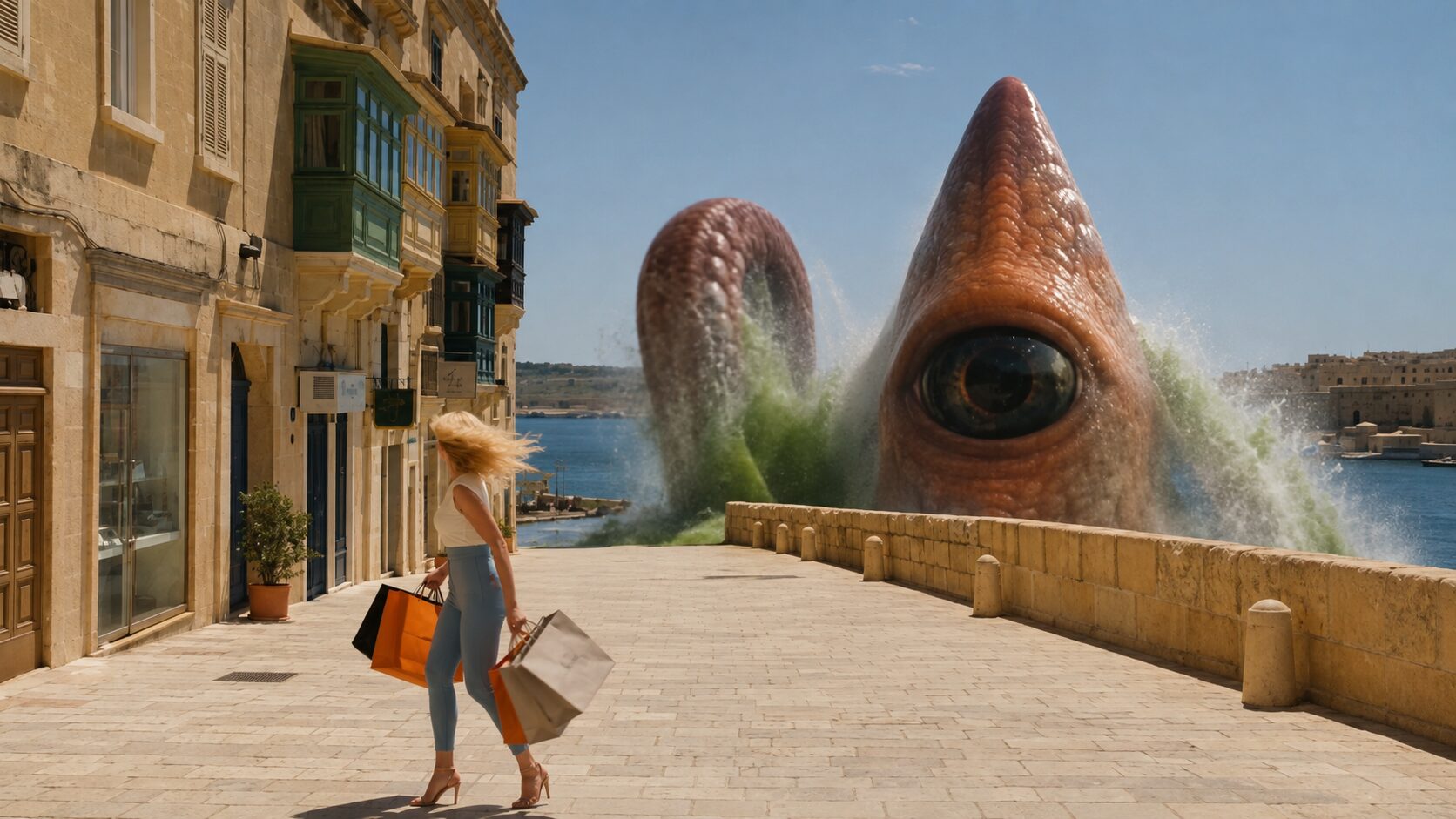
AI Is Not the Enemy: Why We Are Afraid of the Wrong Thing
Why Does Artificial Intelligence Attract So Much Negativity?
The use of artificial intelligence has always attracted negative reactions.
Why?
Because people feel threatened. They fear that AI will replace them, eliminate jobs and dismantle entire industries.
That fear is understandable. However, it is often directed at the wrong people. It also prevents us from recognising how AI can transform creative workflows for everyone.
AI is already being used by design agencies, film studios, advertising companies and major international brands.
Yet when an independent local artist uses the same technology, the response is often dismissive:
“Ah, but it’s AI.”
Yes, it is AI. But AI is a creative tool—just as CGI is a tool.
AI Is Becoming the New CGI
When you watch a science-fiction film, do you believe an alien spacecraft genuinely exploded above a city?
Of course not.
The film industry has relied on computer-generated imagery, digital environments, compositing and visual effects for decades. Audiences accept these techniques because they are associated with established studios, large budgets and recognised professional hierarchies.
The discomfort begins when those same creative possibilities become accessible to individuals.
Independent artists can now experiment with cinematic storytelling without needing the financial resources of a major production studio.
AI does not remove creativity. It changes how creative ideas can be produced.
Generative AI Is Like Having a Miniature Film Studio
If you have watched the videos I created using Seedance 2.5 over the past few days, you will have seen how advanced generative AI video has become.
However, the technology does not simply create an entire artistic vision at the press of a button.
To produce these videos, I must:
Develop the original concept and story
Design the characters
Build the environments
Select the costumes
Establish the colour palette
Plan the action and movement
Direct the camera
Create reference images
Maintain visual and character consistency
Review, refine and regenerate unsuccessful results
I also needed professional photographs showing my face and body from multiple angles. These images allowed me to create a visually consistent representation of myself as the protagonist.
The AI generates the video from the world, references and instructions I give it.
It is becoming like having a miniature production studio at my fingertips. It can perform some of the work that once required an entire visual-effects department, but it still needs a person to imagine the world, direct the action and make the creative decisions.
The authorship exists in the concept, direction, storytelling and world-building—not only in the physical production of each individual frame.
Why Does the Democratisation of Technology Cause Anger?
Whenever technology makes an expensive or exclusive process more accessible, established hierarchies feel threatened.
People who once controlled access to specialised tools, production budgets or creative industries are no longer the only ones capable of producing ambitious work.
An independent artist can now create cinematic environments, monsters, transformations and visual effects without having access to a Hollywood studio.
That democratisation can be deeply uncomfortable.
There are legitimate concerns surrounding:
Employment
Copyright
Artistic ownership
Consent
Training data
Automation
The power of technology companies
These issues deserve serious discussion.
However, attacking individual artists for experimenting with emerging technology does not solve any of them.
Automation will change employment. It already has. The productive response is not to deny the technology or shame the people using it.
We should instead demand ethical systems, transparent policies, fair working practices and meaningful protection for creators.
The Greater Danger: Your Digital Identity
There is another issue that deserves much more public attention: the images we upload to social media.
To create consistent AI representations of myself, I deliberately organised professional photographs showing my face and body from multiple angles.
This was a conscious decision made for my own artistic work.
But consider what already exists on an ordinary Facebook or Instagram profile.
Over the years, many people have uploaded hundreds—or even thousands—of photographs of themselves, their children and their family members.
These photographs may show:
Different ages
Facial expressions
Body positions
Clothes and hairstyles
Homes and personal locations
Schools and workplaces
Photographs from multiple camera angles
Together, these images can create an extremely detailed visual record of a person.
Publicly available photographs can potentially be downloaded, collected and misused to create convincing synthetic representations without that person’s knowledge or consent.
Some mainstream AI platforms restrict pornography and other abusive material. Unfortunately, not every platform or privately operated system follows the same safeguards.
Children’s Images Require Particular Care
The issue becomes even more serious when children’s photographs are involved.
Children are often too young to understand or consent to the permanent digital identity being created for them.
Parents may post photographs with completely innocent intentions. However, once an image is online, it can be difficult to control how it is copied, stored, shared or reused.
Even private accounts are not completely risk-free.
Privacy settings can reduce exposure, but they cannot guarantee that an image will never be copied, leaked or accessed by someone outside its intended audience.
We must therefore become more careful about the type and number of photographs we publish—especially photographs of children.
Be Critical of AI—but Direct the Criticism Correctly
The answer is not simply to hate AI.
The answer is to understand it.
We need stronger education about:
Digital identity
Consent
Deepfakes
Copyright
Online privacy
AI-generated media
The long-term consequences of posting personal images
We also need laws and platform protections that respond to the rapid development of synthetic media.
AI is not disappearing. It will become more advanced, more accessible and more deeply integrated into creative and professional workflows.
Instead of dismissing every AI-assisted artwork with the comment, “Ah, it’s AI,” perhaps we should ask more meaningful questions:
Who conceived the work?
Who developed its artistic direction?
Who designed its characters and visual world?
Was the source material used with consent?
Whose identity is being represented?
How can we prevent abuse without suppressing creative innovation?
The technology is not the whole story.
What matters is who is using it, how it is being used and whether the people represented within it have given their consent.
AI is not the enemy.
Ignorance, misuse and the absence of consent are the real dangers.