Introduction
Social media platforms have transformed the way people access information, interact with others, and participate in public discourse. Yet alongside these benefits, growing concerns have emerged about how these platforms shape what users see—and how that content affects them.
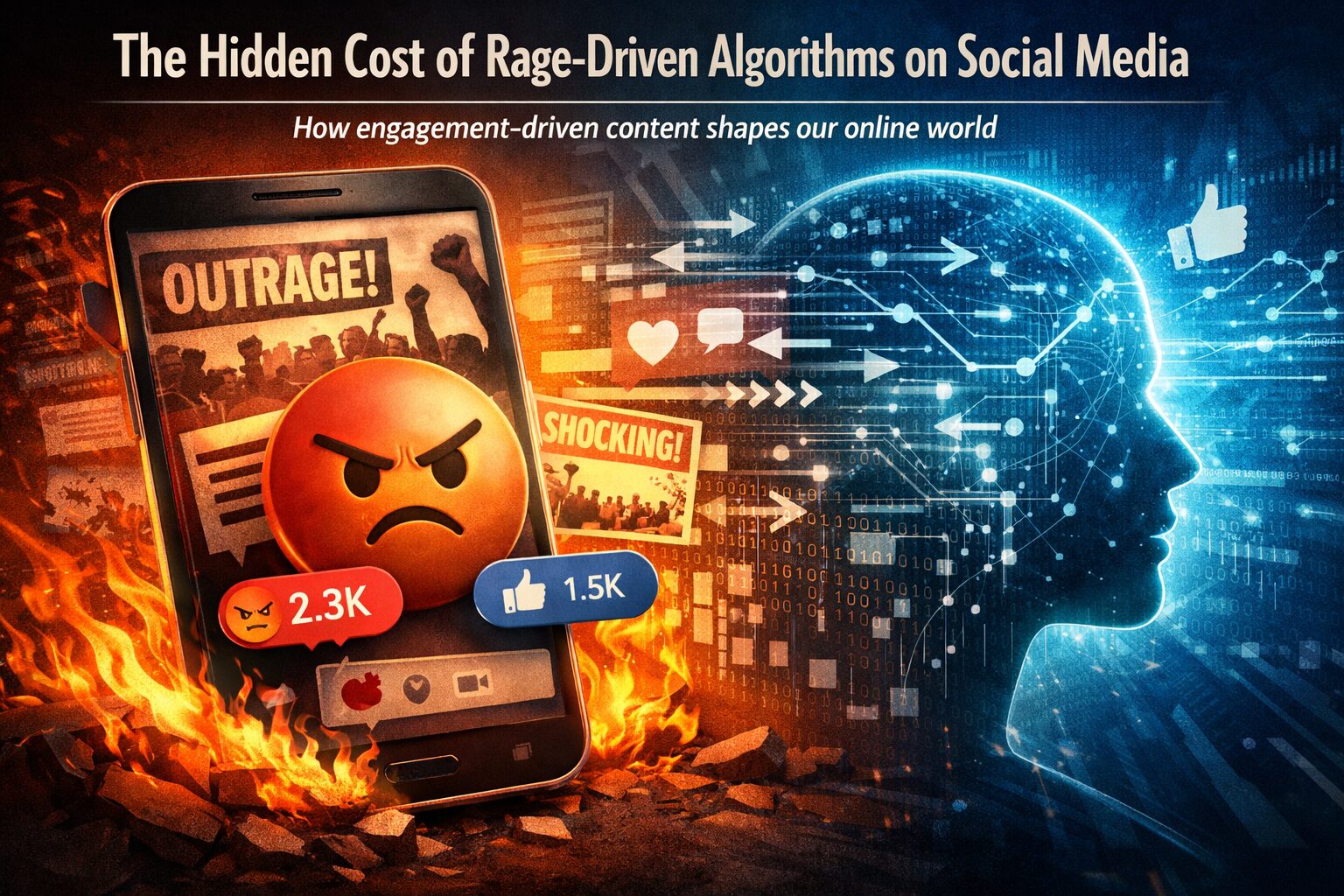
One increasingly visible phenomenon is the spread of so-called rage-bait: posts deliberately designed to provoke anger, outrage, or strong emotional reactions in order to maximise engagement. As engagement becomes the primary metric that drives visibility online, content that provokes conflict or intense reactions often spreads further than balanced or neutral information.
Recent reporting by BBC News has highlighted how these dynamics are shaping the online environment, raising questions about the broader social and psychological impact of algorithm-driven platforms.
The Rise of Rage-Bait Content
Rage-bait refers to content crafted specifically to trigger strong emotional reactions. These posts often rely on controversy, provocation, or deliberately polarising statements designed to spark arguments and reactions.
Because social media algorithms are designed to prioritise engagement—likes, comments, shares, and viewing time—posts that generate strong emotional responses are often amplified. Anger, outrage, and conflict tend to produce higher interaction levels than neutral content, making them particularly effective within engagement-driven systems.
As a result, creators seeking visibility may intentionally produce content that provokes audiences rather than informs them.
Algorithms and Emotional Amplification
Modern social media platforms rely heavily on recommendation algorithms to curate each user’s feed. These systems analyse user behaviour and promote content likely to keep people interacting with the platform.
However, this model can unintentionally amplify emotionally charged material. If a user reacts strongly to certain posts—even negatively—the system may interpret this interaction as interest and continue delivering similar content.
Over time, this feedback loop can create feeds dominated by provocative or emotionally triggering material, even if the user would prefer a different type of content.
The Challenge of Controlling One’s Feed
One striking aspect of algorithm-driven feeds is how difficult they can be to redirect. Even users who are digitally literate and experienced online may find it challenging to shift their feeds toward healthier or more constructive topics.
Attempts to focus on positive interests—such as sport, creativity, or education—can still be disrupted by recurring emotionally charged posts that the system believes will generate engagement.
This dynamic highlights a structural imbalance between user intent and platform incentives. While individuals may seek meaningful or constructive content, algorithms are primarily optimised to maximise time spent on the platform.
Why This Matters for Society
If adults with technological literacy struggle to manage algorithmic content exposure, the implications for younger users are even more concerning. Children and teenagers often engage with these platforms during critical stages of emotional and cognitive development.
When digital environments reward outrage and conflict, they risk shaping how public discourse unfolds online. They may also influence how individuals perceive social issues, debate, and disagreement.
These concerns are prompting growing discussion about the ethical responsibilities of technology companies and the need for greater transparency around how algorithmic systems operate.
Key Insight
Engagement-driven algorithms are not neutral tools. By prioritising reactions and interaction above all else, they can unintentionally amplify emotionally charged content, shaping what millions of people see every day.
Understanding this dynamic is essential if society hopes to build healthier digital spaces.
Conclusion
Social media platforms remain powerful tools for communication, creativity, and information sharing. Yet the systems that determine what content reaches users are still evolving, and their broader consequences are only beginning to be understood.
If the digital information environment is increasingly shaped by algorithms optimised for attention and engagement, then a broader conversation about responsibility, regulation, and user protection becomes unavoidable.
The challenge ahead is not simply technological—it is societal. Ensuring that digital platforms contribute to healthy public discourse rather than amplifying conflict may prove to be one of the defining issues of the online age.