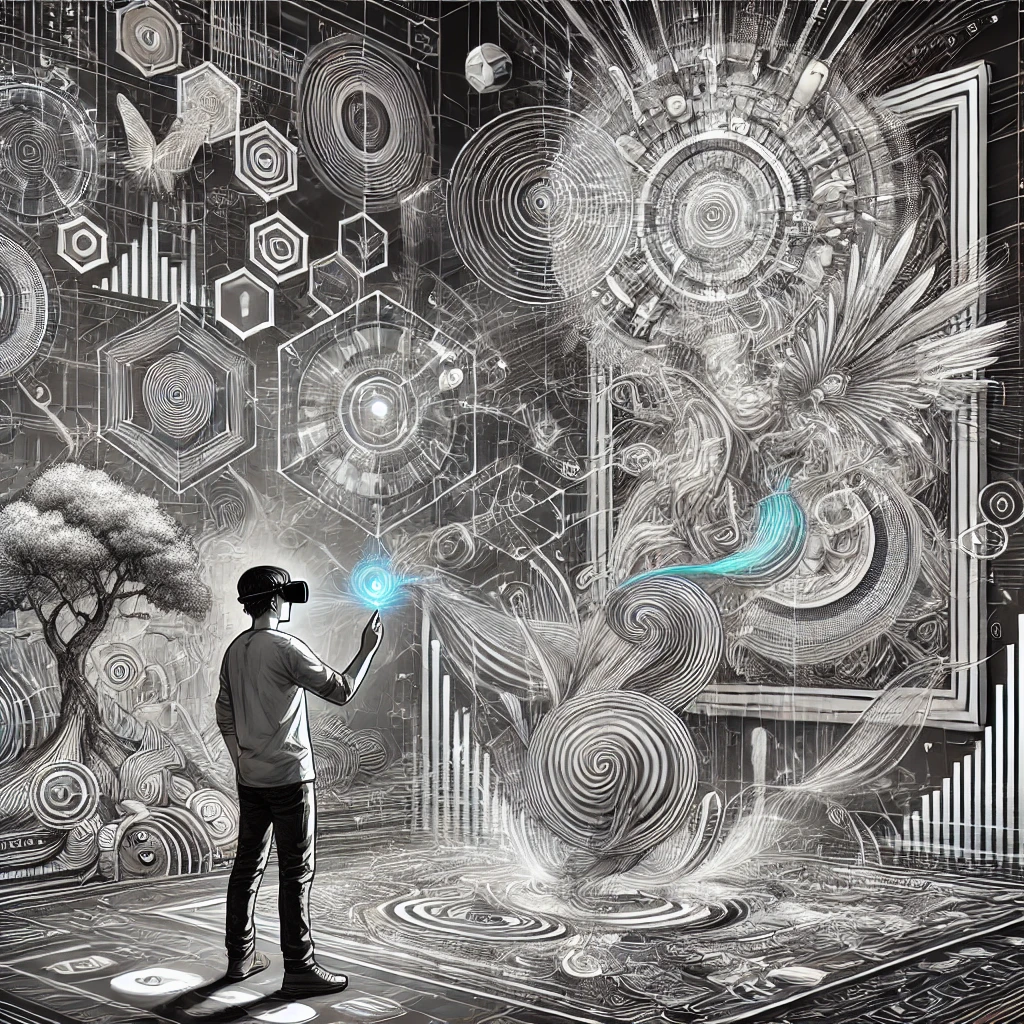
The art world is transforming, with Augmented Reality (AR) and Artificial Intelligence (AI) leading the way. Picture stepping into a gallery where walls come alive, swirling with colors that respond to your movements and emotions. This is the future of interactive art, where AR overlays digital visuals onto the real world, and AI breathes life into these creations by making them adaptive and responsive.
How AR and AI are Changing Art
Artists like Refik Anadol harness AI to process massive datasets—such as weather patterns or urban movements—turning them into breathtaking, immersive AR environments. Platforms like Acute Art enable creators like Olafur Eliasson to design holographic sculptures that can be experienced through a smartphone. Meanwhile, tools like Adobe Aero are democratizing AR art, allowing creators to build interactive, AI-powered experiences accessible to audiences worldwide.
Interactive Art: Where Viewers Become Creators
The integration of AR and AI in art is more than just innovation—it’s about fostering connection. These technologies transform viewers into co-creators, letting them influence the artwork with their gestures, emotions, and even biometric data like heart rate. This creates deeply personal, adaptive art experiences unlike anything we’ve seen before.
The Limitless Potential of AI and AR in Art
With the rise of AR glasses and the rapid growth of AI, the possibilities for AI-driven interactive art are endless. Imagine public spaces and private galleries filled with dynamic installations that evolve in real-time. The canvas is no longer flat—it’s alive, immersive, and waiting for your touch.
This blend of AI and AR is transforming how we perceive and interact with art. No longer are we just observers—we are participants in a world where art is dynamic, intelligent, and infinitely engaging.